
- HOME PAGE
- / BLOG
BLOG
The Return of Organic Forms: Curves, Ovals and Fluid Spatial Design
In 2025 interior design, one of the most powerful transformations is the shift from the harsh, geometric lines of modernism toward natural curves, organic silhouettes, soft edges and fluid spaces.
Spaces are no longer expected to be merely functional; they are expected to be tactile, flowing, calming and emotionally balanced.
Sharp corners, rigid symmetry and box-like compositions are gradually being replaced by:
- curved walls,
- oval lines,
- organically contoured furniture,
- wave-like ceilings,
- sculptural arches,
- fluid circulation routes.
This trend is not simply a visual preference—it's a design philosophy that brings nature’s rhythm, the human body’s ergonomics and the psychology of softness into the architectural experience.
This comprehensive guide explains what organic forms are, why they have returned so strongly, how they shape modern interiors, and how they merge with 2025 material trends.
1. What Are Organic Forms? The Soft Evolution of Design
Organic forms are inspired by nature. Instead of straight lines and sharp corners, they embrace curves, flowing shapes and natural contours.
The core components include:
1.1. Curved Lines
Lines that mimic nature’s rhythm—restful, dynamic and visually gentle.
1.2. Oval Geometry
Soft, balanced shapes used in architecture, furniture and décor.
1.3. Fluid Spatial Planning
Instead of spaces divided by rigid boundaries, circulation flows smoothly from one zone to another.
1.4. Natural Contours
Surfaces inspired by stone, water, dunes, tree trunks and natural erosion patterns.
Organic design transforms interiors into human-centered, sensory and emotionally soothing environments.
2. Why Are Organic Forms Returning? (2025 Trend Analysis)
2.1. Psychological Effect: Safety, Calmness and Softness
Curved surfaces create a sense of comfort and safety.
Sharp corners activate alertness; oval forms communicate relaxation.
This is why organic design is spreading across:
- homes,
- hotels,
- wellness centers,
- cafés and restaurants.
2.2. Softening the Chill of Minimalism
After years of strict minimalism with its cold, rigid simplicity, 2025 brings a warmer, more sensual evolution.
Organic forms enrich minimalist spaces with character and approachability.
2.3. Harmony With the Human Body
The human body is made of curves—not straight lines.
Therefore, organic interiors feel more natural in terms of:
- movement,
- ergonomics,
- spatial comfort.
2.4. Influence of Biophilic Design
The global desire to reconnect with nature has renewed interest in natural, calming geometries.
2.5. New Production Technologies
Curved surfaces are now easier to manufacture thanks to:
- flexible MDF,
- thermoformed panels,
- 3D-printed structures,
- acrylic surfaces shaped with heat,
- CNC-cut organic profiles.
Technology has liberated design.
3. Curves in Architecture: Spatial Applications
3.1. Curved Walls
They add dynamism and directional flow, especially in living rooms, hallways and bedrooms.
3.2. Oval Archways
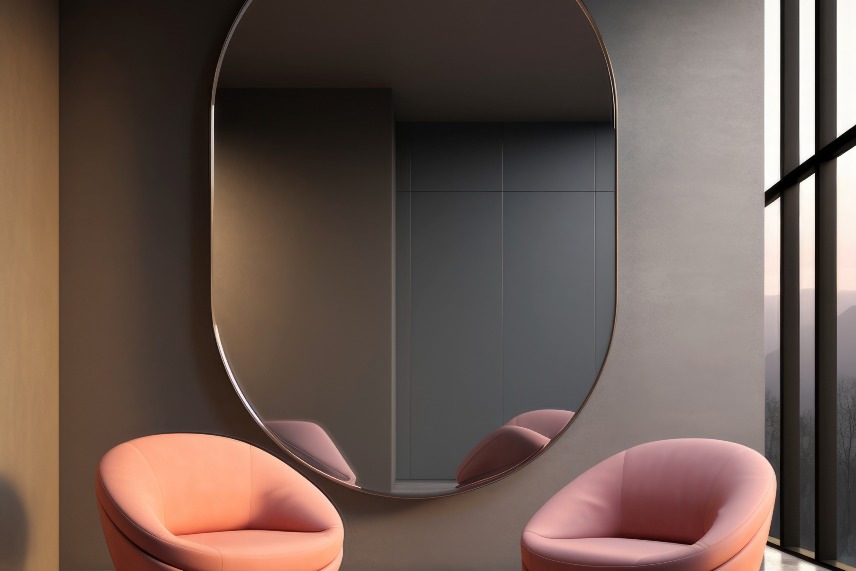
Instead of sharp rectangular openings, oval arches create continuity and softness.
3.3. Curved Ceilings
- wave-like gypsum forms
- LED-accented curves
- soft radius paneling
- sculptural overhead motions
They bring luxury and spa-like ambience.
3.4. Curved Staircases
A sculptural centerpiece that transforms the entire environment.
3.5. Organic Niches
Rounded niches (circular or droplet-shaped) add functional and decorative elegance.
4. The Rise of Organic Furniture
2025 furniture trends are dominated by organic lines.
4.1. Oval Sofas and Seating
Sharp-edged sofas are being replaced by:
- rounded silhouettes,
- soft back curves,
- “puffy” organic modules.
4.2. Pebble-Shaped Coffee Tables
Inspired by smooth river stones—minimal, soft and nature-driven.
4.3. Curved Bed Headboards
Sculptural and gentle, creating a relaxing bedroom identity.
4.4. Fluid Storage Units
- curved cabinet doors
- oval shelves
- rounded TV units
They contribute to visual harmony and safety.
4.5. Contour-Shaped Chairs
Ergonomics and aesthetics blend in modern chair design.
5. Material Combinations in Organic Design (2025)
5.1. Wood + Curves
The most natural pairing.
Walnut, oak and teak textures enhance organic lines.
5.2. Concrete + Soft Geometry
A modern contrast: strong material meets soft form.
5.3. Marble + Rounded Edges
Luxury redefined with oval marble dining tables, island blocks and countertops.
5.4. Fabric + Gentle Silhouettes
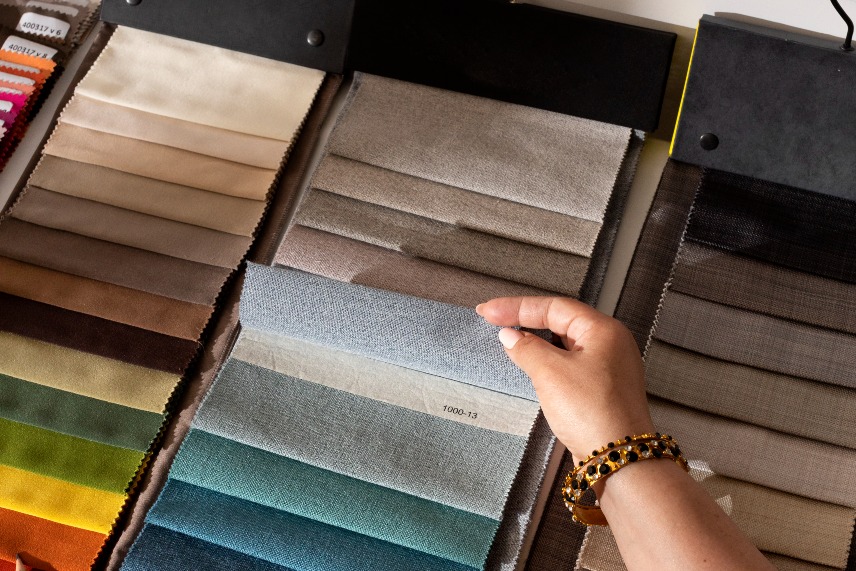
Bouclé, linen, suede and nubuck amplify the softness.
5.5. Metal + Sculptural Shapes
Brushed or polished metal meets curved contemporary forms.
6. Fluid Spatial Design: Connecting Functions Smoothly
6.1. Seamless Flow
Living room → kitchen → dining area
Fewer walls, more continuity.
6.2. Soft Zone Transitions
Curved partitions and half-height forms create subtle boundaries.
6.3. Organic Circulation Paths
Walking through the house resembles a smooth, natural journey.
6.4. Oval Kitchen Islands
Sharply edged islands are replaced by comfortable oval blocks.
7. Organic Lighting Trends
7.1. Wave-Form LED Lines
Flowing light paths along the ceiling.
7.2. Oval Pendants
Soft, minimal, futuristic.
7.3. Soft-Glow Panels
Diffused light through curved surfaces.
7.4. Sculptural Lighting
Lighting as a functional artwork.
8. Organic Design in Small Spaces
Organic forms are incredibly effective in compact homes:
- rounded corners expand visual volume
- curved ceilings increase perceived height
- oval tables improve circulation
- curved furniture occupies less visual space
- fluid cabinets ease movement
Organic design becomes a spatial optimization tool.
9. Organic Forms in Luxury Interiors
Luxury is being redefined as:
“Sculptural, organic, sensory design.”
Key elements:
- onyx with curved edges
- free-standing oval bathtubs
- soft marble transitions
- sculptural metal features
- large organic art pieces
10. Conclusion: The Future of Space Is Fluid, Not Rigid
2025 interior design embraces a simple truth:
“If sharp lines don’t exist in nature, why should they in our homes?”
Curves, ovals and fluid lines:
- relax the mind
- enhance circulation
- soften modern aesthetics
- increase comfort
- create balance, warmth and unity
Organic design is no longer a trend—it is the new foundation of spatial beauty.