
- HOME PAGE
- / BLOG
BLOG
Natural Material Use in Interior Design and Climate Competence
The use of natural materials in interior design has become a core component of climate-responsive and sustainability-oriented architecture. As global climate change accelerates and user expectations shift toward healthier and long-lasting living environments, natural materials such as solid wood, natural stone, lime plaster, clay finishes, hemp-based textiles, bamboo surfaces, and organic coatings have moved from aesthetic preferences to functional necessities.
Definition and Importance of Natural Materials
Natural materials refer to components that require minimal processing, have low embodied energy, contain no harmful chemicals, and maintain compatibility with environmental cycles. They enhance indoor air quality, reduce volatile organic compound (VOC) emissions, and contribute to energy-efficient thermal regulation. Due to their vapor permeability and hygroscopic behavior, natural materials improve thermal comfort and passive climate control.
Material Categories and Climate Performance
1. Wood
Solid wood species such as oak, walnut, and pine offer strong thermal regulation, moisture buffering, and tactile comfort.
Technical Advantages:
- High vapor permeability
- Natural thermal insulation
- Hygroscopic moisture regulation
- Long-term durability and patina formation
Wood’s thermal mass contributes to stabilizing indoor temperatures and enhancing energy efficiency in cold and variable climates.
2. Stone and Natural Minerals
Materials like marble, travertine, granite, and limestone provide high-density thermal mass.
Climate Efficiency:
- Heat absorption and delayed heat transfer
- Cooling effect in warm climates
- Long lifespan and recyclability
These materials reduce cooling loads in hot regions and maintain stable indoor conditions.
3. Lime Plaster, Clay Plaster, and Natural Coatings
Lime and clay-based wall systems are increasingly used due to their breathability, matte appearance, and non-toxic composition.
Technical Benefits:
- Vapor-open wall structure
- Passive humidity control
- Mold resistance
- Diffuse light reflection
Lime plaster is historically proven as a climate-adaptive solution in Mediterranean architecture.
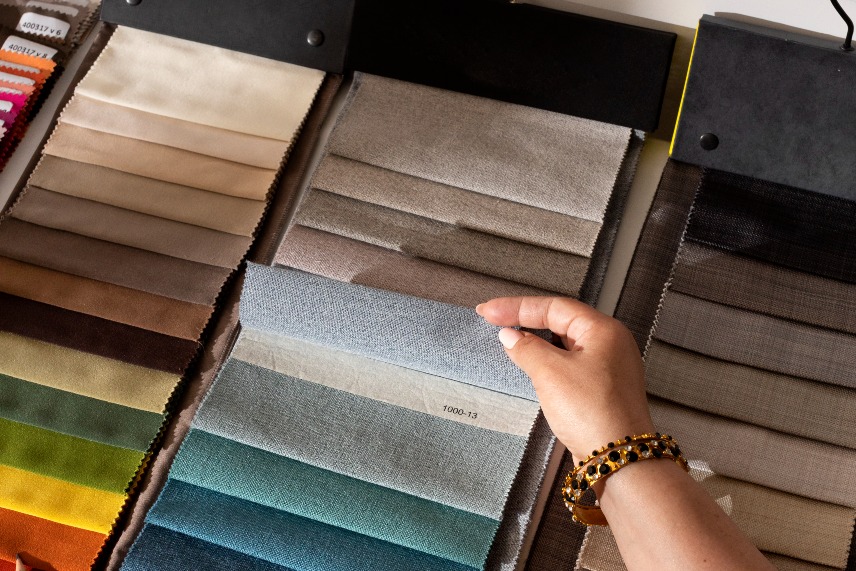
4. Bamboo, Hemp, and Natural Fibers
Natural fibers such as hemp, jute, linen, bamboo, and organic cotton offer low embodied energy and contribute to healthy indoor environments.
They support both acoustic performance and thermal comfort while reducing synthetic surface toxicity.
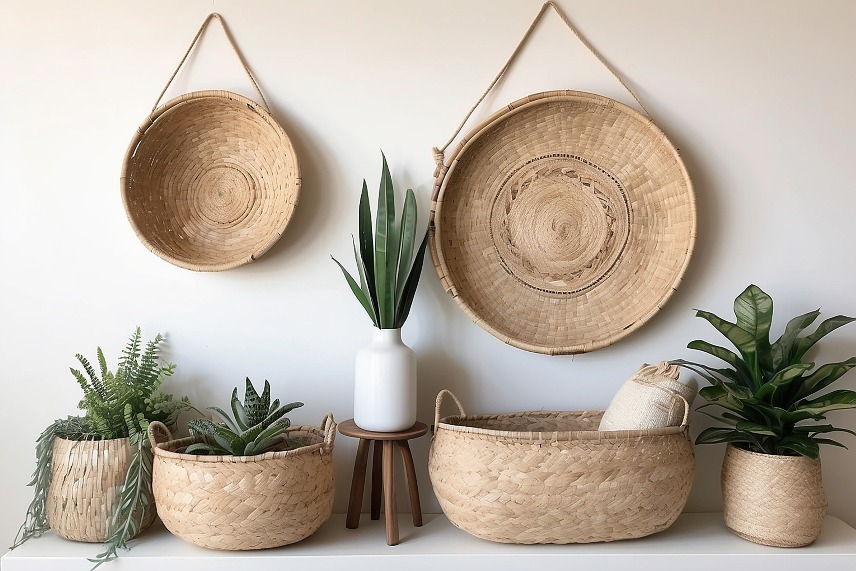
5. Clay, Ceramic, and Natural Vessels
Clay and ceramics regulate moisture, stabilize microclimates, and create textural continuity in interiors.
Climate-Responsive Material Selection
The selection of natural materials directly affects energy efficiency, thermal comfort, and long-term interior stability.
For Hot Climates
- Stone or terrazzo flooring
- Breathable lime or clay wall finishes
- Bamboo or rattan furniture
- Lightweight natural textiles (linen, cotton)
These combinations dissipate heat and support passive cooling.
For Cold Climates
- Solid wood cladding
- Wool carpets and natural felt elements
- High-density timber furniture
- Hybrid clay-wood interior systems
Wood’s low thermal conductivity improves comfort and reduces heating demand.
Trend: Natural Minimalism
Natural Minimalism focuses on:
- Unprocessed textures
- Matte finishes
- Soft neutral tones (sand, beige, taupe, warm greys)
- Climate-adaptive surface systems
- Material visibility and simplicity
This trend aligns with climate-responsive interior design principles.
Energy Efficiency and Material Interaction
Natural materials enhance passive environmental control:
- Lime plaster: balances wall temperature and enhances vapor diffusion
- Wood: buffers humidity and improves thermal stability
- Stone: reduces cooling loads
- Hemp insulation: increases thermal resistance and reduces heat transfer
This synergy creates climate-competent living spaces and supports long-term sustainability.
Psychological Impact: Biophilic Design
Natural materials support biophilic well-being:
- Lower stress levels
- Increased focus and calmness
- Improved perceived comfort
- Stronger emotional connection to the space
Biophilic systems combine natural textures, plants, daylight, and organic forms.
2025 Material Palette and Natural Textures
The most compatible colors with natural materials include:
- Off-white
- Light grey
- Beige and sand tones
- Earth tones
- Olive green
- Terracotta
These tones reinforce texture depth and visual harmony.
Conclusion
Using natural materials in interior design is no longer a stylistic preference but a climate-responsible requirement. Their performance in energy efficiency, thermal comfort, indoor air quality, and long-term durability positions them as the primary materials for contemporary and future living spaces.