zey.sey


- HOME PAGE
- / BLOG
BLOG
Concept Design in Workplaces: Office Spaces Are Evolving
In 2025, the transformation of office spaces is not just about changing walls or new furniture; it’s being shaped by concept designs that reflect workplace culture, team dynamics, and brand identity. For example, unlike traditional open-office layouts, the hybrid working model is being redefined with sub-zones such as creative areas, quiet focus rooms, and team meeting foyers.
This article will examine in detail the main aspects of office concept design, trend terminology, spatial psychology, sustainability, technology integration, and innovations for future-ready workplaces.
1. New Work Models and Spatial Transformation
The definition of the office changed after the pandemic. Terms like hybrid work, remote-supported office, and flexible desk systems are now fundamental. This transformation replaces fixed individual desks with active seating areas, foyer-lounge interaction zones, and competition/setup areas as dynamic spatial elements.
Concept design seeks answers to questions like: What type of activity does this space serve? Is it just for working, creating, or socializing?
For this reason, offices are divided into zones: quiet focus rooms, creative team areas, and quick meeting pods. Each zone is designed for a specific purpose, supporting both concentration and collaboration.
2. Brand Identity and Interior Harmony
Modern offices should reflect a brand’s identity physically. The concept of brand experience applies not only to marketing but also to the internal workspace experience.
The concept design process enhances the employee experience through corporate colors, graphic wayfinding, sound-light environments, and material choices.
For example, in a technology company, a free-form shared table area with multi-purpose display zones and interactive panels can visually express the brand’s innovative spirit through spatial language.
3. Layered Zoning and Smart Space Management
In office concept design, zoning, or dividing areas into functional layers, is essential. Smart space management systems (IoT-based sensors, temperature/motion detectors, display panels) have become the new standard.
A design that supports this system combines open, semi-open, and closed area strategies. For example, a high-ceiling lounge can be designed alongside semi-private phone booths and fully enclosed meeting rooms, maintaining both openness and privacy.
This layered planning increases spatial efficiency while improving acoustic and visual balance.
4. Color Palette, Material Selection, and Biophilic Approach
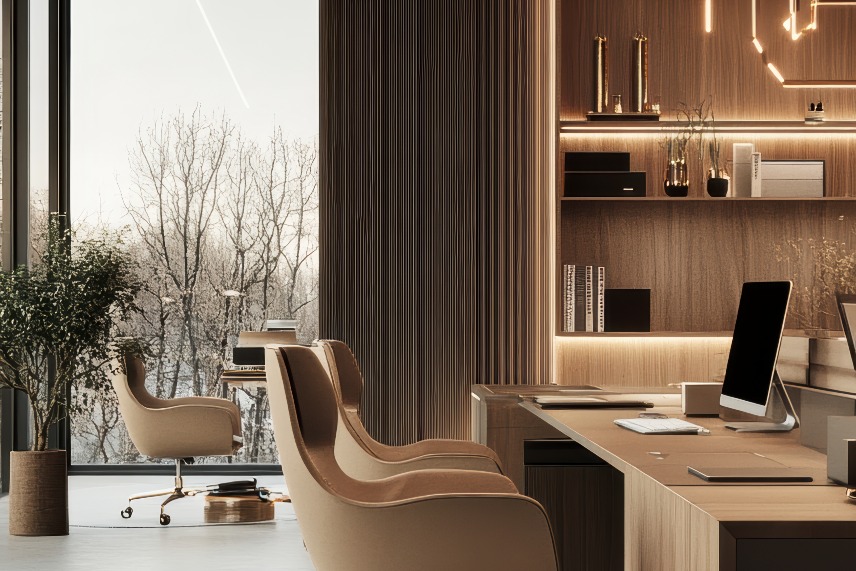
The materials and color palettes used in office interiors are shaped by 2025 design trends. Natural textures (wood, stone, bamboo) combined with green plants embody biophilic design, supporting open-mindedness and creative processes.
The color palette merges corporate blues and grays with accent tones such as warm beige, ivory, and deep emerald green.
Lighting temperature also becomes a design tool that directs users — activating them during work hours and relaxing them after.
This holistic approach strengthens the emotional connection between people and their work environment.
5. Technology Integration and Hybrid Infrastructure
In new concept offices, aesthetics and technological infrastructure go hand in hand.
Elements such as wireless charging stations, flexible desk systems, AR/VR meeting zones, smart lighting, and soundproof collaboration pods now define modern workspace architecture.
Due to hybrid structures, seamless transitions between IT cabinets, phone booths, and open lounge areas must be ensured.
Technology not only improves efficiency but also personalizes the work experience.
6. Sustainability, Acoustics, and Human-Centered Design
Sustainable materials, energy-saving systems, and employee well-being are integral parts of the design concept.
To ensure acoustic comfort, designers now use ceiling panels, fabric insulation layers, and noise-absorbing furniture.
At the same time, human-centric design emphasizes biological and emotional well-being through circadian lighting systems and well-being environments.
The goal is to support both mental and physical comfort — an office that breathes and adapts to its users.
7. Future-Ready Offices: Flexibility, Adaptation, and Scalability
Office concepts in 2025 and beyond are not static; they must be modular and scalable.
Wall systems, mobile partitions, and variable seating arrangements create multi-functional spaces adaptable to future needs.
Additionally, the “minimal design” approach that emerged after the pandemic remains important for health and hygiene:
integrated hand sanitizers, touchless door solutions, and outdoor ventilation links are now standard elements.
Flexibility has become not only an aesthetic principle but also a safety and well-being standard.
8. Conclusion: Work Is Changing, So Is Space
The office is no longer just a “desk and chair”; it’s an experience zone, a team stage, and a brand ambassador.
Concept design brings this transformation into physical form — improving employee experience, increasing spatial efficiency, and integrating brand messages with architecture.
Future-ready offices plan every detail with precision — from color choices to technology integration, from acoustics to sustainability.
The workplaces of 2025 are designed not just to host work, but to inspire life.